Diets & Eating
Food Combining and the Digestive System That Ignores It
The rule says never eat protein and starch together because the stomach cannot manage both. The pancreas releases its full enzyme package regardless of what you ordered.

This is written to be used rather than admired. Each section below is a decision about food combining rules and digestion, and each one has a default.
Before you start
- Nearly every whole food contains protein, carbohydrate and fat together.
- The pancreas releases enzymes for all three macronutrients at once.
- Persistent digestive symptoms have identifiable causes worth investigating.
What the rule claims
Food combining systems hold that proteins and starches require incompatible conditions and must therefore be eaten at separate meals. Fruit is usually required to be eaten alone, often on an empty stomach and never after other food. The stated consequence of breaking the rules is fermentation, putrefaction and the production of toxins in the gut.
The system dates from the early twentieth century and predates most of what is now known about digestive physiology. It has been repeated continuously since, largely unchanged, which is unusual for any claim about how the body works.
What the digestive system actually does
The stomach secretes acid and an enzyme that begins breaking down protein, and it does this whenever food arrives. When the partly digested mixture enters the small intestine, the pancreas releases enzymes for protein, starch and fat simultaneously.
At the dose actually studied, it does not sample the meal first and choose which enzymes to send, because the release is triggered by the arrival of food itself. Bile is released alongside to emulsify fats, again without reference to what else is present. The system is built for mixed meals, which is the only kind of meal our ancestors ever ate.
Mixed foods are the ordinary case
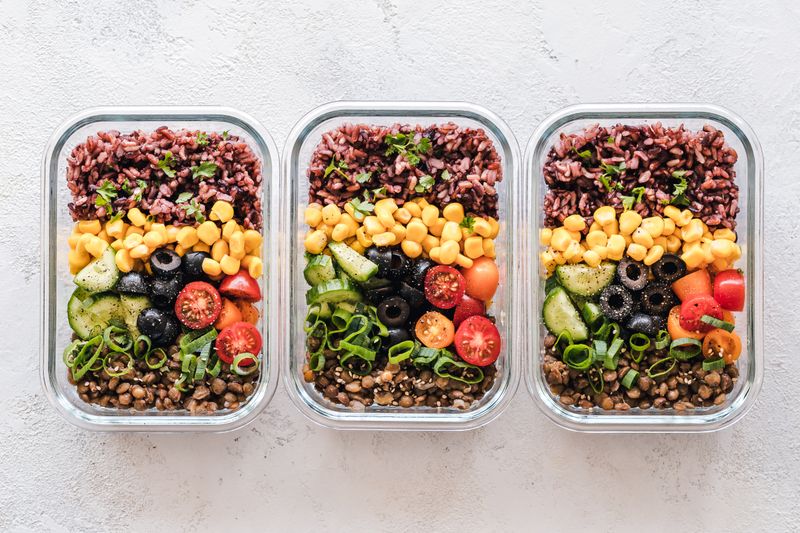
Beans, lentils, grains, nuts and dairy each contain protein and carbohydrate together in the same bite. Human milk contains protein, sugar and fat simultaneously, which is a difficult fact for a system claiming they are incompatible.
Once you look at who funded it, a rule that forbids combinations occurring naturally in single foods has an obvious internal problem. Proponents usually respond by exempting whole foods from the rule, which is an exception invented to protect the rule. Adding exceptions to preserve a claim, rather than revising the claim, is a reliable indicator of a system rather than a finding.
Why people feel better on it
Following the rules requires simpler meals, more planning and usually less eating out, all of which reduce intake. Restaurant meals, alcohol and rich sauces are the first casualties, and each of those affects digestive comfort independently.
Against the trial data, portion sizes fall because separated meals tend to be smaller and less varied than combined ones. Attention to eating slowly and mindfully often accompanies the practice, and that alone reduces symptoms for many people.
The improvement is real and its explanation is entirely ordinary, which is the pattern across most of this category.
Where digestive symptoms actually come from
Reflux relates to the valve at the top of the stomach and responds to meal size, timing, weight and specific triggers. Irritable bowel syndrome is a genuine diagnosis with recognised dietary approaches that a dietitian can guide. Lactose intolerance is common in much of the world and is straightforward to identify and manage.
Once you look at who funded it, gallbladder problems, coeliac disease and medication effects each produce symptoms that food combining cannot address. These have investigations and treatments, which is more than can be said for a rule about eating fruit alone.
Nothing here is a diagnosis or a treatment recommendation; a doctor or pharmacist is the person to ask about your own situation.
What to do instead
Keep a record of symptoms with timing, since timing points to mechanism far better than food lists do. Meal size and speed are usually more influential than food pairing, and both are easy to change experimentally.
Persistent symptoms, difficulty swallowing, weight loss or blood are reasons to see a doctor rather than adjust a rule. A dietitian can run a structured investigation that produces an answer, which food combining never does. If you enjoy eating this way, no harm follows from it, and the theory attached to it is simply not correct.
The takeaway
Your pancreas sends the whole enzyme package every time. Persistent digestive symptoms deserve investigation rather than a rule about pairing.
The body already has organs for this, and none of them are sold in a box.
Questions readers ask
Does fruit rot in the stomach if eaten after a meal?
No. The stomach is strongly acidic, which prevents the fermentation this claim describes, and the contents empty in a normal sequence. Delayed emptying can cause discomfort, but that is a different mechanism entirely.
Do digestive enzyme supplements help?
They have specific medical uses where the pancreas is not producing enough, prescribed after a diagnosis. For people with normal pancreatic function, the evidence for general use is weak.
Also by Sneha Rajagopal
- The Sugar Detox and the Withdrawal Story It BorrowsDiets & Eating
- Raw Food and the Enzymes That Cooking Is Blamed ForDiets & Eating
- Why Every Wellness Gadget Claims to Work on FrequenciesGadgets & Devices
- Red Light Therapy: Where the Evidence Is and Where It Runs OutGadgets & Devices