Reading the Evidence
A Mechanism in a Dish Is Not an Effect in a Person
Shown to kill cancer cells in the laboratory is the most reliably misleading sentence in wellness writing. Bleach does that too, at concentrations nobody could survive.

This is less a set of instructions about laboratory findings and what they predict than an argument, and it is worth saying so at the start.
The argument in brief
- Cell studies use concentrations rarely achievable in living tissue.
- Absorption and metabolism sit between a compound and its target.
- Most laboratory findings never translate into a working treatment.
What a cell study actually establishes
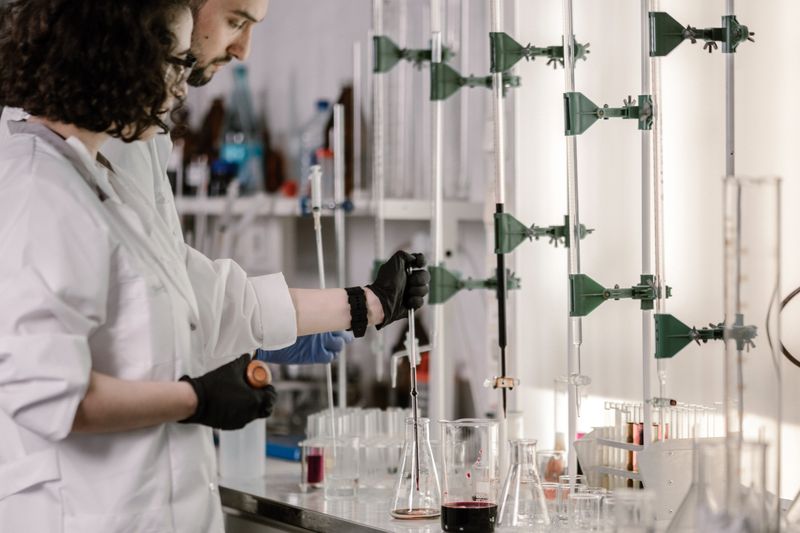
Cells grown in a dish are exposed to a compound at a chosen concentration, and something is measured afterwards. A positive result establishes that the compound can affect those cells under those conditions, which is genuinely useful information.
It establishes nothing about whether swallowing the compound produces any effect anywhere in a person. This kind of work is how research begins, and treating it as a conclusion inverts its place in the process. The sentence has been shown in laboratory studies is doing quiet work in almost every article that contains it.
The concentration problem
The concentrations applied to cells are frequently far higher than anything achievable in human blood from eating or supplementing. To reach such levels internally, a person would often need a quantity of the food or extract that is physically impossible to consume. The dose is applied directly to the cells with none of the losses that occur along a digestive route.
Once you look at who funded it, marketing rarely mentions the concentration, because the figure is the part that dissolves the claim. Asking what concentration was used, and whether blood levels can reach it, is the single most useful question here.
Everything between the mouth and the cell
A swallowed compound must survive stomach acid and digestive enzymes before absorption can even be considered. It must then cross the intestinal wall, which many compounds do poorly, and survive first pass through the liver.
The liver chemically alters many substances immediately, sometimes into inactive forms and sometimes into different active ones. What circulates must then reach the target tissue, which for the brain means crossing a highly selective barrier. Each step reduces what arrives, and a compound can fail at any one of them while remaining impressive in a dish.
Cells in a dish are not tissue in a body
Cultured cells lack blood supply, immune interaction, hormonal signalling and the structural context of real tissue. Cancer cell lines in particular have been grown for decades and have accumulated changes that make them unrepresentative.
The absence of an immune system removes one of the most important variables in how any disease actually progresses. Results from a dish therefore describe a simplified system chosen for convenience rather than for realism.
That simplification is the point of the method, and it is also its limitation.
The attrition nobody advertises
The pharmaceutical development process exists precisely because most compounds that look promising in cells fail later. They fail on absorption, on toxicity, on lack of effect in animals, and then again in human trials.
That attrition is the ordinary experience of drug development rather than an unusual run of bad luck. A supplement marketed on a cell study has skipped every stage at which such candidates normally fall over. The failure rate is the reason regulators require human evidence rather than accepting mechanistic plausibility.
Nothing here is a diagnosis or a treatment recommendation; a doctor or pharmacist is the person to ask about your own situation.
How to read the sentence when you meet it
Identify whether the study used cells, animals or people, since the word study conceals an enormous difference. For cell work, ask about concentration and whether an equivalent level is achievable in blood.
For animal work, ask about the dose relative to body weight and whether the species handles the compound similarly. For either, ask whether any human trial has followed, and what it found. If the trail stops at the dish after many years, that is informative rather than merely incomplete.
The takeaway
Ask what concentration was used and whether a person could ever reach it. That question ends most laboratory-based health claims.
An extraordinary mechanism needs better evidence than testimonials, and usually has less.
Questions readers ask
Does that mean cell studies are worthless?
Not at all, and they are an essential first step that guides where to look next. The error is treating a starting point as a finished conclusion.
Why do so many foods kill cancer cells in a dish?
Many compounds are toxic to cells at sufficient concentration, including entirely ordinary ones. Selectivity for cancer cells over healthy ones at achievable concentrations is the hard part, and it is where most candidates fail.