Gadgets & Devices
Massage Guns, Soreness and the Range of Motion Number
Percussive devices produce a measurable short-term increase in how far a joint moves, which is the finding they are sold on. The claims about fascia and lactic acid are a different matter.
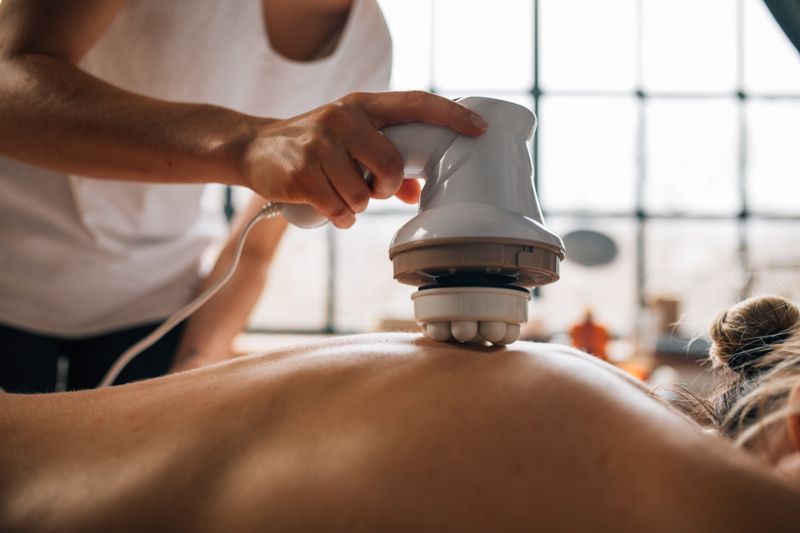
Most explanations of percussive massage devices and their effects stop at the point where it starts to matter. This one carries on.
The short version
- Short-term range of motion gains are among the more replicated findings here.
- The fascia release and lactic acid explanations do not match the physiology.
- Bruising and nerve irritation occur when the device is used over the wrong areas.
What the device delivers
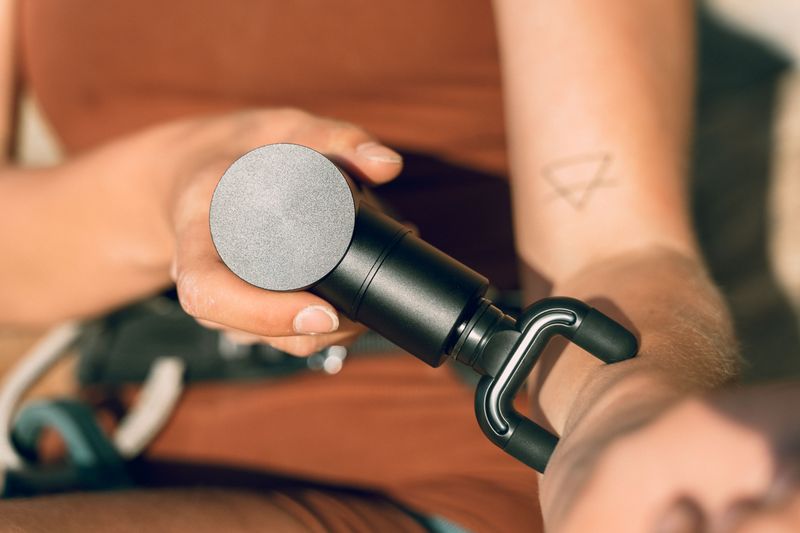
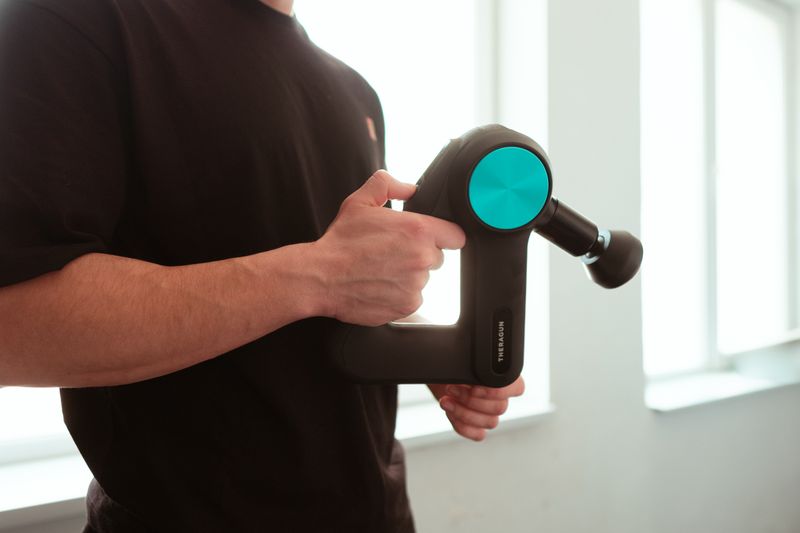
A motor drives a head back and forth at high frequency with a short stroke, delivering rapid repeated pressure into tissue. That input strongly stimulates the mechanical receptors in skin, muscle and connective tissue.
Intense non-painful sensory input reduces how strongly pain signals from the same region are perceived, which is a well-described effect. Local blood flow in skin increases and tissue warms, both of which are straightforward consequences of vigorous mechanical stimulation. These are real effects with real mechanisms and they are short-lived, which is the honest frame for the product.
The range of motion result
Studies applying these devices before activity have fairly consistently found increases in joint range of motion immediately afterwards. The gains are modest, measured within minutes, and typically not accompanied by the strength loss that prolonged static stretching can produce. That combination makes it a reasonable warm-up adjunct, which is one of the more defensible uses in this category.
The effect appears to be neural, involving reduced protective muscle tone rather than any lasting change in the tissue. It also fades, which means the device is doing something temporary rather than fixing anything.
The explanations that do not hold
Fascia is tough connective tissue, and the forces required to deform it meaningfully are far beyond what a handheld motor produces. Adhesions and knots are widely described and poorly defined, and imaging studies have not established the structures the language implies. Lactate is cleared from blood within about an hour of exercise and is not the cause of soreness a day later.
Flushing toxins from muscle is the same unnamed-substance claim that runs through the rest of this site. A device can work through a mechanism different from the one advertised, and here the advertised one is the weak part.
What it does for soreness
Trials on delayed onset muscle soreness generally report reductions in reported soreness, similar to hands-on massage. Measures of muscle function and markers of muscle damage move much less consistently than the soreness ratings do. This is the same pattern as compression and cold devices, where the feeling improves more reliably than the function.
Feeling less sore has genuine value for adherence to training, and that is worth stating as a benefit in itself.
It is not the same as accelerating repair, and repair is what the recovery framing implies.
Using one without hurting yourself
Bony areas, joints and the front of the neck are places to avoid, since there is little tissue between the head and something important. Nerves running close to the surface, including at the inner elbow, behind the knee and in the armpit, can be irritated by direct percussion. The abdomen, the kidneys area, and directly over the spine are not appropriate targets for a percussive device.
Bruising is common when the device is held too long in one place or used at high intensity on lean areas. A few reports describe more serious injuries from aggressive use, including muscle damage and bleeding in people on anticoagulants.
Who should ask first
Anyone on anticoagulants or with a bleeding disorder should ask a clinician, since bruising and deeper bleeding are more likely. A suspected clot, an acute injury, an area of numbness, or unexplained pain of unknown cause are reasons to be assessed rather than treated.
Once you look at who funded it, people with osteoporosis, recent fractures, or implanted devices should get individual advice about where and whether to use one. Pain that increases during use is a stop signal rather than a sign of working, whatever the marketing says about pressure. Used sensibly on large muscles it is a convenient way to reproduce some of what a massage does, which is a fair claim.
The takeaway
It moves your range of motion for a while and it does not release fascia or flush lactate. Keep it off bone, nerves and anything you cannot name.
When the marketing is more precise than the study, believe the study.
Questions readers ask
Is it as good as a sports massage?
For short-term soreness and range of motion the results are broadly comparable, and a therapist assesses you and adjusts, which a motor cannot.
Should I use it before or after training?
Before is where the evidence is more consistent, because of the range of motion effect without the strength cost. Afterwards it may reduce soreness, which is a comfort benefit.