Supplements
Collagen and What Your Stomach Does to a Protein
The collagen argument has one genuinely interesting piece of chemistry and one large unproven leap. Both deserve to be described accurately.
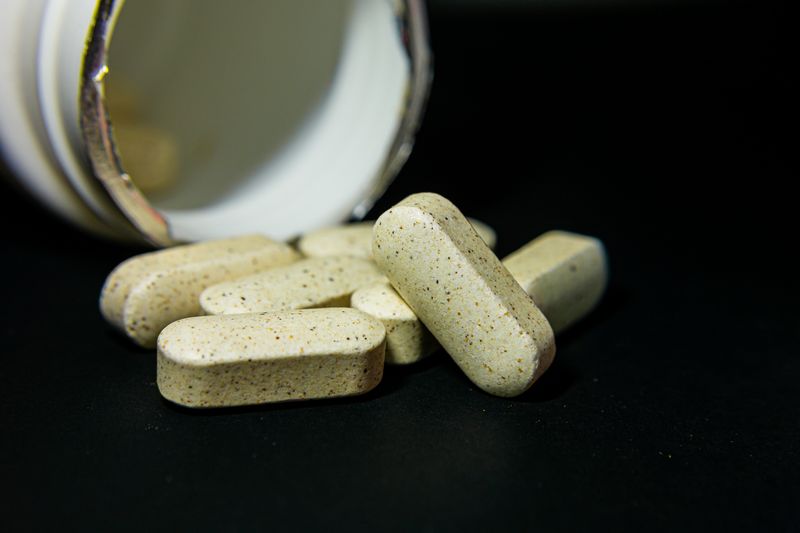
What follows is the working version of collagen supplements and protein digestion: the decisions in the order you actually meet them, with the reasoning attached.
Before you start
- Digestion breaks proteins into amino acids and small peptides before absorption.
- Some collagen-derived peptides do appear in the bloodstream after a dose.
- Whether that changes skin or joints is where the evidence remains weak.
What collagen is in the body
Collagen is the main structural protein of connective tissue, forming ropes of three intertwined chains that give tissue tensile strength. It is abundant in skin, tendon, ligament, cartilage and bone, where the specific type and arrangement differ by tissue.
The body builds it continuously from amino acids, using vitamin C as a required cofactor in one of the assembly steps. Production declines with age, which is a genuine observation and the starting point for the entire supplement category. A real decline does not establish that swallowing the finished protein reverses it, and that is the gap being sold.
What digestion does to a swallowed protein
Protein entering the stomach meets acid and an enzyme that begins cutting the chains into shorter fragments. In the small intestine, pancreatic enzymes continue the process, reducing fragments to single amino acids and very short peptides. The intestinal wall absorbs those units rather than intact proteins, which is why eating a heart does not build a heart.
Once you look at who funded it, absorbed amino acids enter a common pool that the body draws on for whatever it happens to be constructing. Nothing in that pathway carries an address label directing the material back towards skin or cartilage.
The strongest part of the argument
Some collagen-derived peptides of two or three amino acids do survive digestion and can be detected in blood after a dose. That is a real finding, and it is more interesting than the flat objection that all protein is simply broken down. Some researchers propose that these fragments act as signals rather than as building material, prompting cells to increase production.
On the label, that is a hypothesis with a plausible mechanism, and it is exactly the sort of thing that deserves proper testing. Describing it as established, which much of the marketing does, jumps several steps that have not been taken.
Where the evidence gets thin
The trials in this area have generally been small, short and funded by ingredient suppliers, which is the familiar pattern. Skin outcomes are frequently measured with subjective ratings or with instruments whose relationship to visible appearance is unclear.
Participants who know they are taking a beauty supplement report improvements readily, which is why blinding matters so much here. Joint pain outcomes face the same problem, since pain is self-reported and responds strongly to expectation.
The honest summary is that the question is open rather than settled, in either direction.
The nutritional angle nobody mentions
Collagen is an incomplete protein, low in some essential amino acids, so it is a poor choice as a general protein source. Total protein intake does matter for tissue maintenance, particularly with age, and that claim has much better support.
Someone eating enough protein overall is unlikely to be limited by the raw materials for collagen synthesis. Vitamin C deficiency does impair collagen formation, which is the mechanism behind scurvy, and it is rare where diets are varied. For most people the constraint is not supply of ingredients, which weakens the simplest version of the argument.
Nothing here is a diagnosis or a treatment recommendation; a doctor or pharmacist is the person to ask about your own situation.
What this means for a buyer
The supplement is generally safe for most people, so this belongs in the unproven column rather than the harmful one. It is also expensive relative to ordinary protein, which makes the cost the main practical objection. Sun protection has far stronger evidence for skin appearance over time than any oral supplement in this category.
Not smoking and sleeping properly belong on the same list, and neither is sold in a tub. Anyone with kidney disease should check protein supplements with a clinician, since protein intake is managed differently in that situation.
The takeaway
The peptide chemistry is genuinely interesting and the outcome evidence is genuinely weak. Sun protection has better support and costs less.
An extraordinary mechanism needs better evidence than testimonials, and usually has less.
Questions readers ask
Does collagen from food work the same way?
Bone broth and gelatine are also collagen and go through the same digestion. Nothing about the supplement form escapes the breakdown that food collagen undergoes.
Do collagen creams work differently?
Collagen molecules are far too large to cross the outer layer of skin, so a topical product acts mainly as a moisturiser. Moisturising has real if temporary effects on appearance.